


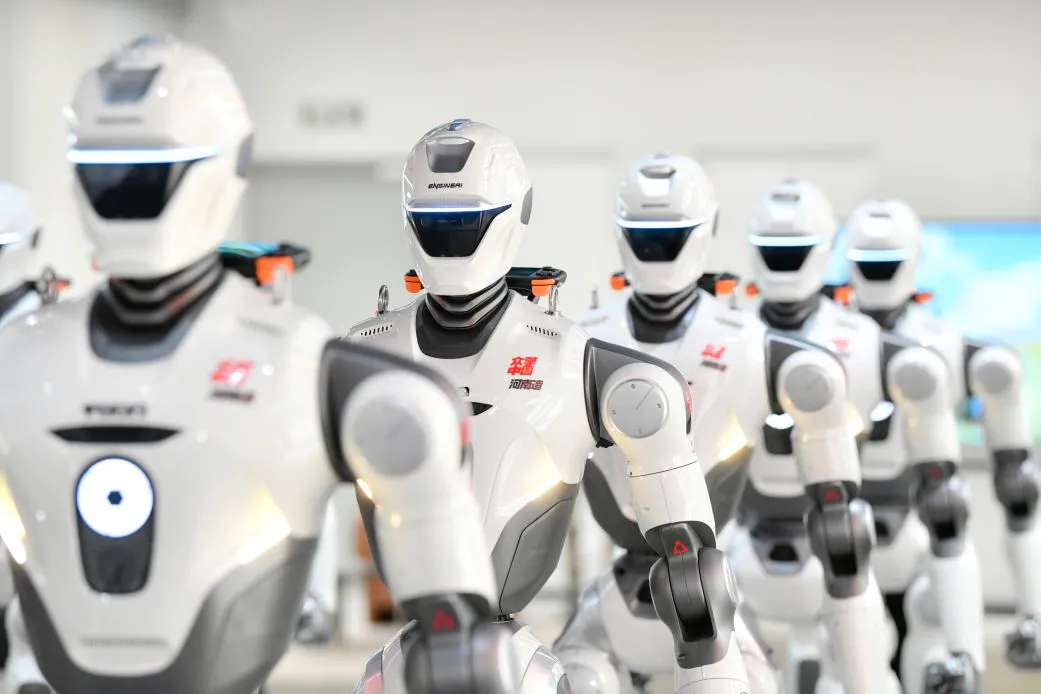
The United States has officially announced a ban on the import of new Chinese-made humanoid robots, quadruped robot dogs, and certain power inverters, citing growing national security and cybersecurity concerns.
The decision, announced by the U.S. Federal Communications Commission (FCC), is expected to further intensify the ongoing technology rivalry between the United States and China. It also comes just weeks before a planned summit between U.S. President Donald Trump and Chinese President Xi Jinping, scheduled for September.
According to the FCC, a White House cybersecurity task force found that foreign-built robots could pose serious cybersecurity risks to critical infrastructure and potentially threaten the safety and security of American citizens. The agency also raised concerns that relying heavily on overseas manufacturing makes U.S. supply chains more vulnerable to disruptions.
As reported by CBS News, FCC Chair Brendan Carr stated that the new restrictions are aimed at securing America’s critical supply chains. The ban applies specifically to new versions of imported humanoid robots, quadruped robots, and power inverters.
China currently dominates the global humanoid robotics industry, controlling an estimated 85% of the market. Analysts at Morgan Stanley project that China’s humanoid robot market alone could reach $15 billion by 2030.
Chinese robotics manufacturers such as Unitree and AGIBOT have rapidly expanded production while significantly reducing manufacturing costs. Industry analysts believe the U.S. restrictions may shield domestic robotics companies like Tesla and Figure AI from intense price competition, but they are unlikely to slow China’s overall robotics development due to its massive domestic demand and expanding international markets.
Research firm Omdia estimates that approximately 15,000 humanoid robots were shipped globally in 2025. Chinese companies Unitree and AGIBOT each delivered more than 5,000 units, while American companies such as Tesla and Figure AI reportedly shipped only a few hundred robots each.
Beyond humanoid robots, the FCC’s restrictions also cover power inverters, critical components used in renewable energy systems, household appliances, and data centres. The decision could have broader implications for energy infrastructure and technology supply chains across the United States.
The move follows several previous U.S. restrictions on Chinese technology products, including drones and advanced semiconductor technologies. U.S. authorities are also reportedly considering tighter controls on Chinese open-source artificial intelligence models as Chinese AI companies continue making rapid progress.
China has strongly criticised the latest restrictions. Foreign Ministry spokesperson Mao Ning accused Washington of using national security as an excuse to suppress Chinese technology companies. She warned that China would take all necessary measures to protect the legitimate interests of its businesses, adding that protectionist policies would ultimately hurt both American companies and consumers.
Industry experts also believe the ban could affect existing partnerships between U.S. and Chinese technology firms. For example, Nvidia recently unveiled a humanoid robot reference design built using a chassis developed by China’s Unitree, highlighting how interconnected the global robotics industry has become.
As geopolitical tensions continue to shape global technology policies, the latest restrictions mark another significant chapter in the growing competition between the world’s two largest economies. The long-term impact on robotics innovation, international trade, and global supply chains remains to be seen.
Source: As reported by CBS News and the Associated Press (AP).
For more interesting technology news and articles, check out our blog page at https://www.absmiley.com/blog/